Context
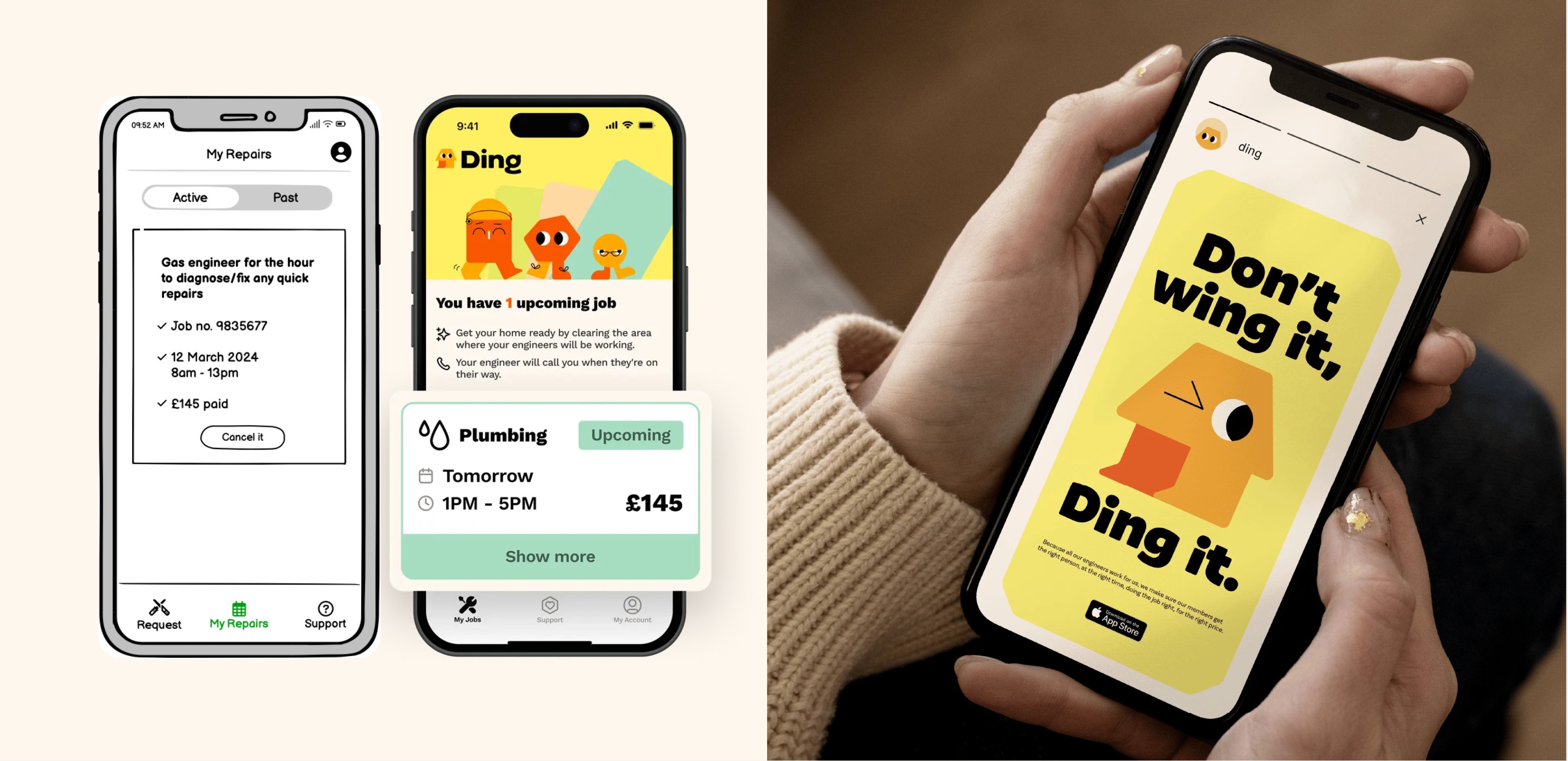
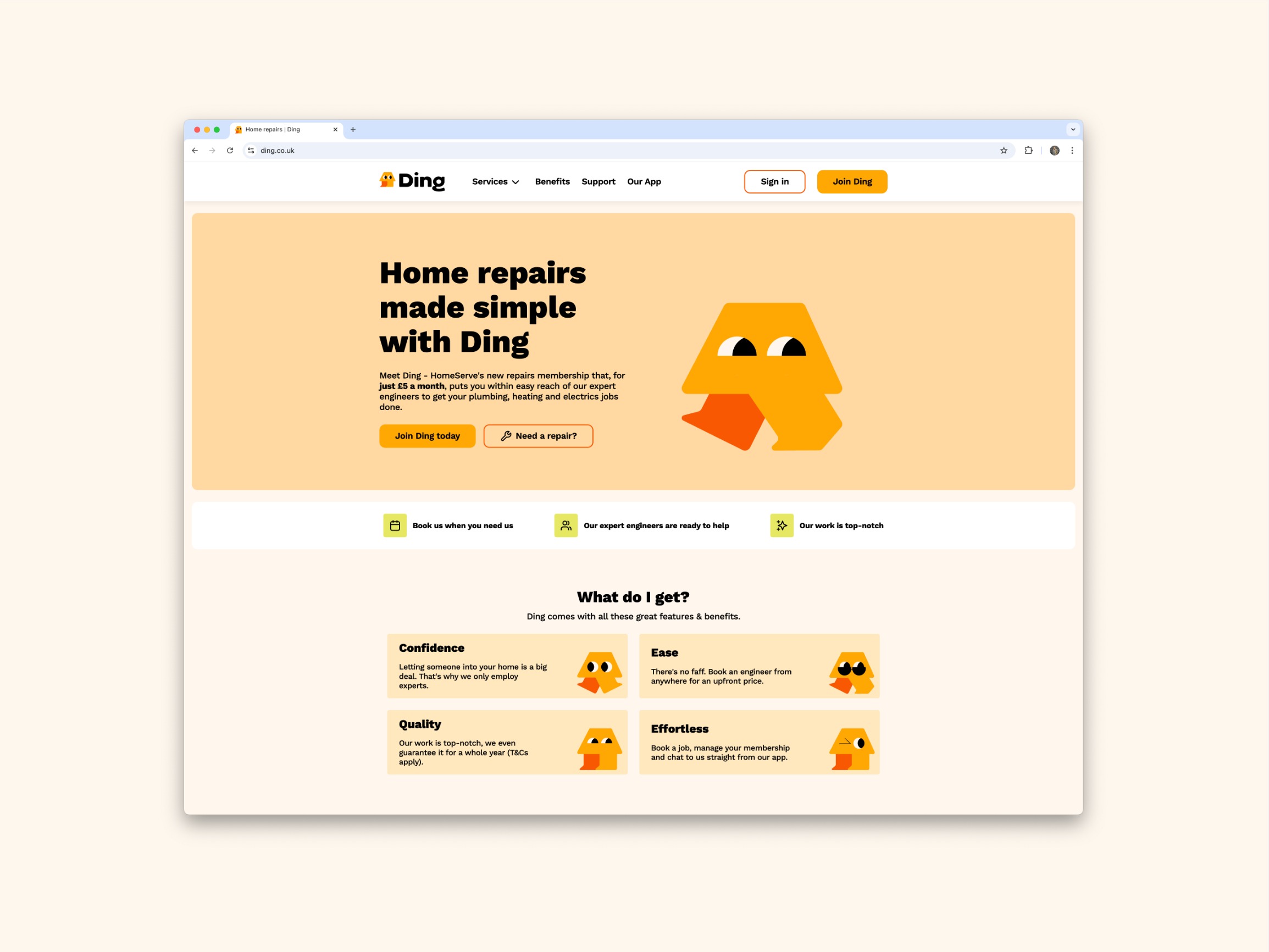
Ding (a HomeServe company) is a mobile-first subscription service that simplifies home repairs by connecting users with trusted tradespeople through upfront pricing and instant booking. In this project I was responsible for the end-to-end conceptualization of the mobile and web application. My primary objective was to translate a complex business vision into a tangible, customer-centric product strategy that could secure internal stakeholder buy-in and funding for further development.
The Challenge
HomeServe wanted to launch a new, agile sub-brand targeting a younger, mobile-first demographic. The challenge was to transform a traditional, phone-based service into a seamless digital experience.
- Define the Core Concept: Distill stakeholder requirements into a clear product vision.
- Secure Funding: Create a high-fidelity prototype and strategic roadmap to convince senior leadership to invest in the project.
- Create a Blueprint: Provide a solid UX foundation for the external design and development agency to build upon.
Strategy & Process
- 1. Conceptual Strategy & Stakeholder Alignment I worked closely with the Product Owner to define the "Ding Journey." We identified the key friction points in home repairs: lack of price transparency and the stress of finding reliable engineers.
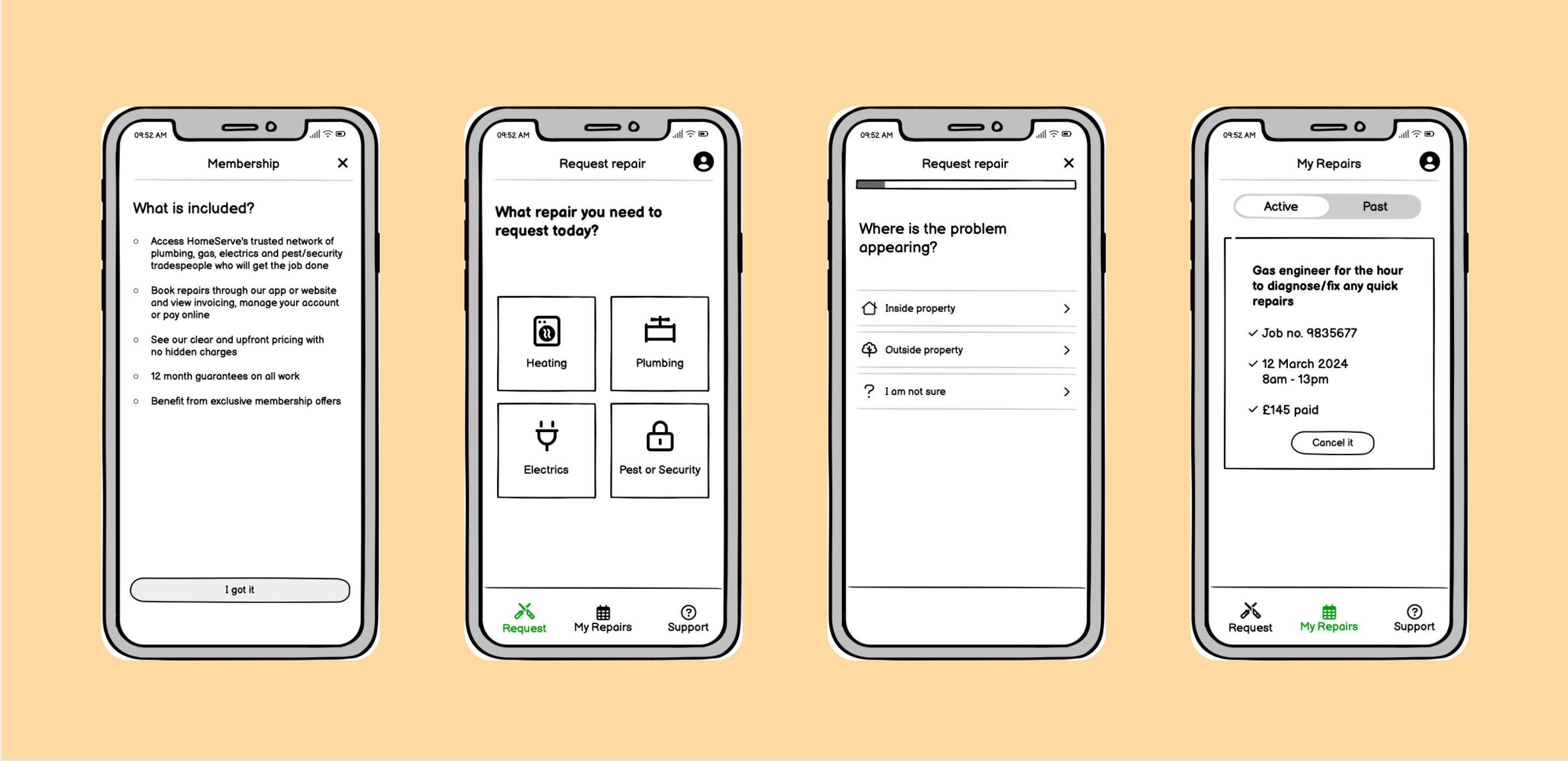
- 2. UX Architecture & Flow Design I mapped out the entire ecosystem—from membership onboarding to the "Instant Booking" flow. The goal was to make the experience as intuitive as possible: "Just Ding and it's done."
- Key Focus: Simplifying the decision-making process for users in high-stress situations (e.g., a burst pipe).
- 3. Prototyping for Buy-In I developed low and mid-fidelity interactive prototypes. These weren't just designs; they were pitch tools. I used them to demonstrate the app's ease of use to "the bosses," proving that the concept was not only viable but essential for HomeServe's digital evolution.
Handover
Once the concept was approved and funding was secured, my work served as the master blueprint. I prepared a comprehensive hand-off package for the local agency (Wildish & Co.), ensuring that the core UX principles, user flows, and functional requirements were preserved during the final UI creation and development phase.
Results
The project was a resounding success. The agency successfully launched the product based on my initial UX strategy and concept.
- Funding Secured: My work successfully triggered the investment needed for full-scale development.
- Market Launch: The app is now live (Ding.co.uk) and thriving in the UK market.
- Impact: Ding has redefined home repairs for thousands of users, praised for its clarity, upfront pricing model, and frictionless booking experience.
Metrics & Achievements
The project was a resounding success. The agency successfully launched the product based on my initial UX strategy and concept.
- Successful Stakeholder Buy-in: Secured internal backing and budget for the MVP.
- Blueprint for Agency: Reduced development time by providing a pre-validated UX framework.
- Scalable Ecosystem: Created a membership-based flow that is now the core of Ding's business model.