Context
I conducted a comprehensive research and discovery phase to define the digital strategy for a newly established department. My role was to audit the current landscape, align diverse stakeholder visions, and deliver a strategic roadmap (Report) that outlines how to build a digital product that effectively supports the department's operational goals.
Problem Statement
The newly established department lacked a unified digital strategy and tools, leading to fragmented communication and undocumented workflows. Without a clear product vision, there was a significant risk of developing features that wouldn't meet the department's operational needs or provide long-term scalability.
Challenges
- Undefined Processes: Since the department was new, many internal workflows were still fluid or undocumented.
- Diverse Stakeholder Visions: Aligning different expectations from leadership, operations, and end-users.
- High Ambiguity: Navigating a "blank slate" environment where the product's core features were not yet defined.
The Process
I applied a robust discovery framework to move from chaos to clarity:
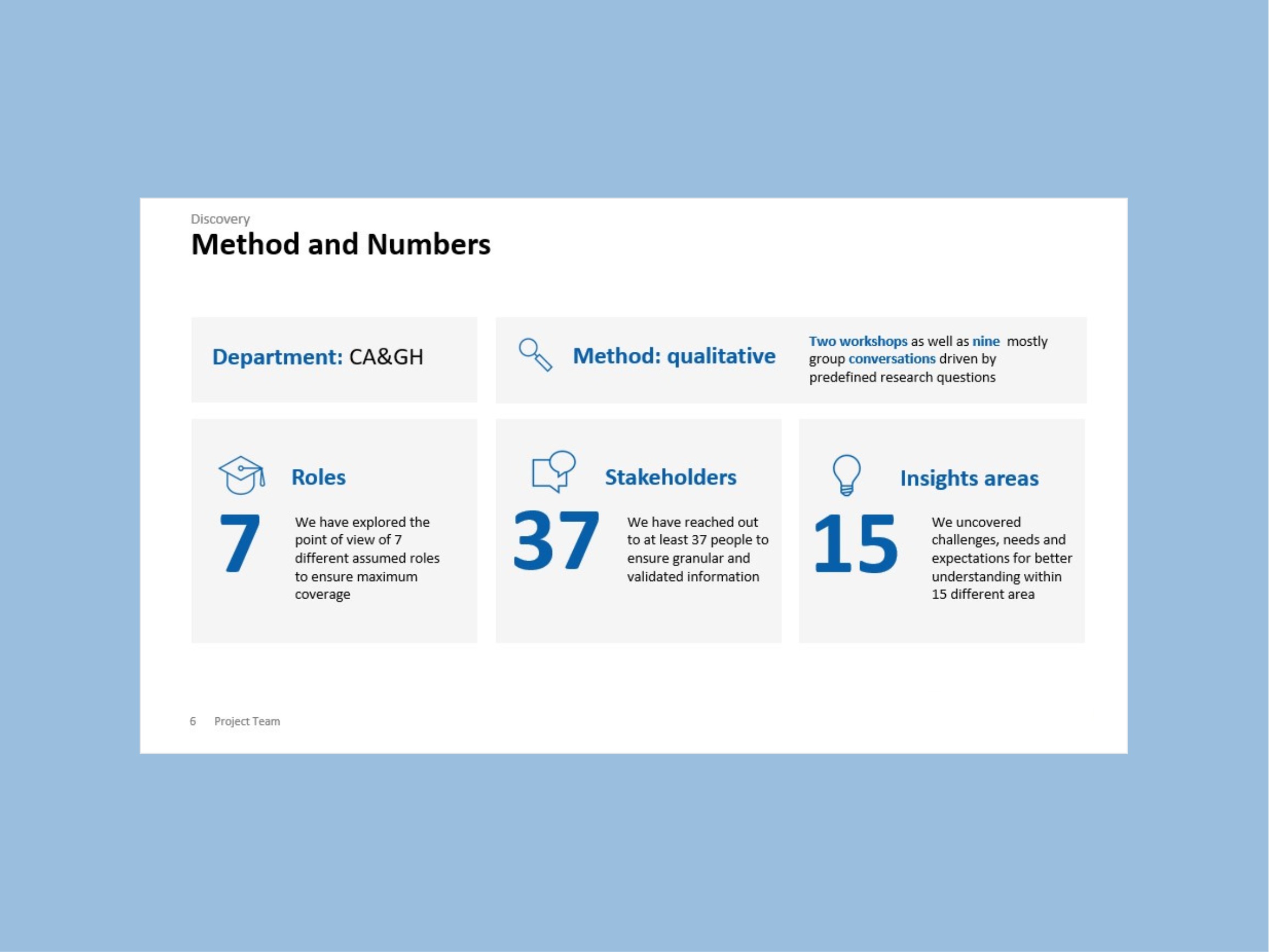
- 1. Stakeholder Interviews: Conducted deep-dive sessions with key players to uncover business goals, pain points, and technical constraints.
- 2. Current State Audit: Analyzed existing (often manual) workarounds and tools used by the team.
- 3. Synthesis & Mapping: Used thematic analysis to identify common patterns and priority areas for the new digital product.
- 4. Reporting & Strategy: Compiled all findings into a comprehensive strategic report, including user personas, high-level user journeys, and a prioritized feature roadmap.
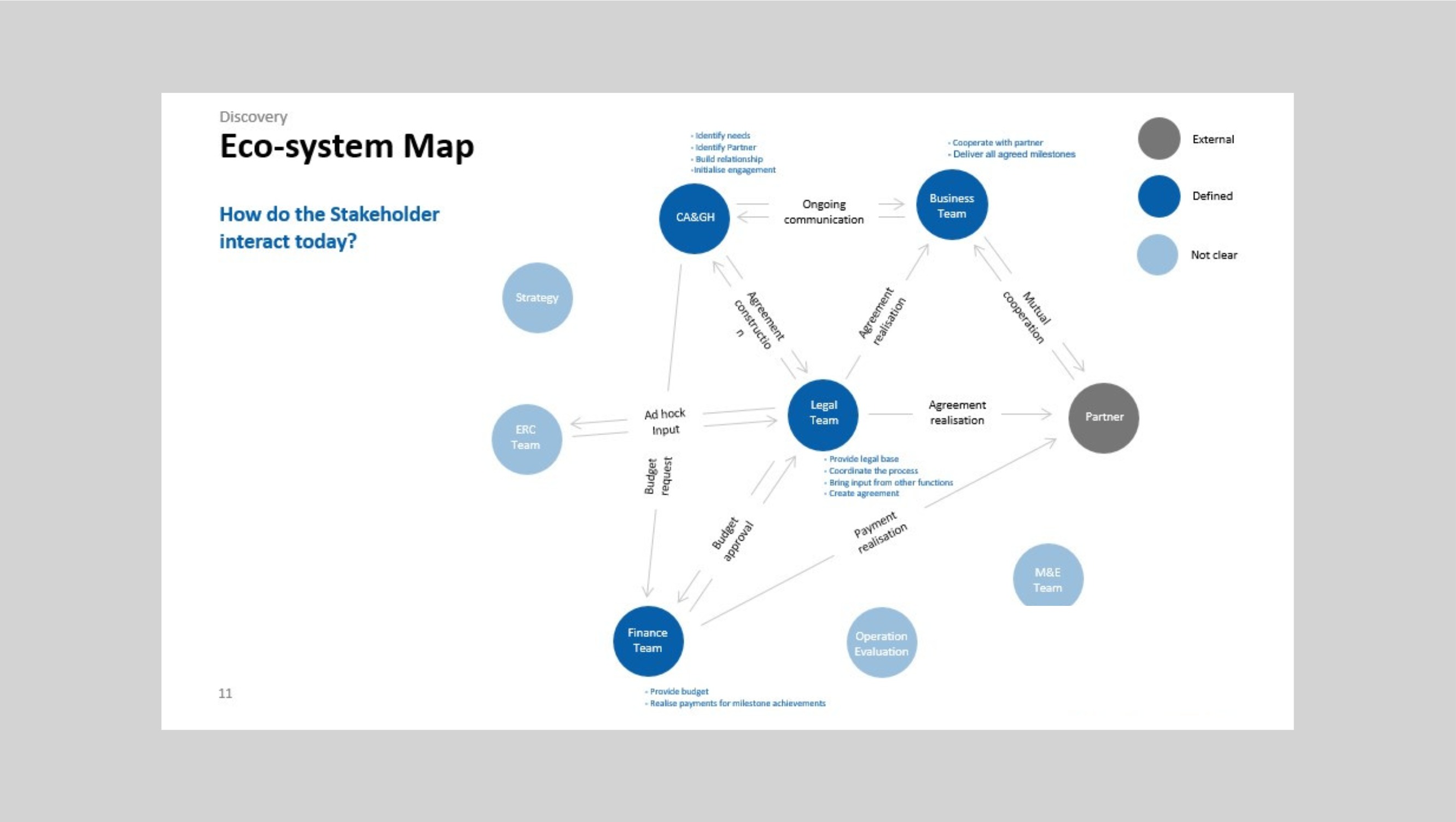
To understand the current friction, I visualized the existing ecosystem. This helped me identify where communication was failing and which teams were operating in "not clear" territories.
Key Findings & Outcome
The discovery phase revealed that the department's primary bottleneck wasn't just data entry, but a lack of automated communication between silos.
- Strategic Report: Delivered a 360-degree view of the current state and a clear "North Star" for the product.
- Product Definition: Defined the Minimum Viable Product (MVP) requirements, preventing scope creep before development started.
- Alignment: Gained unanimous stakeholder buy-in on the proposed product direction and technological stack.
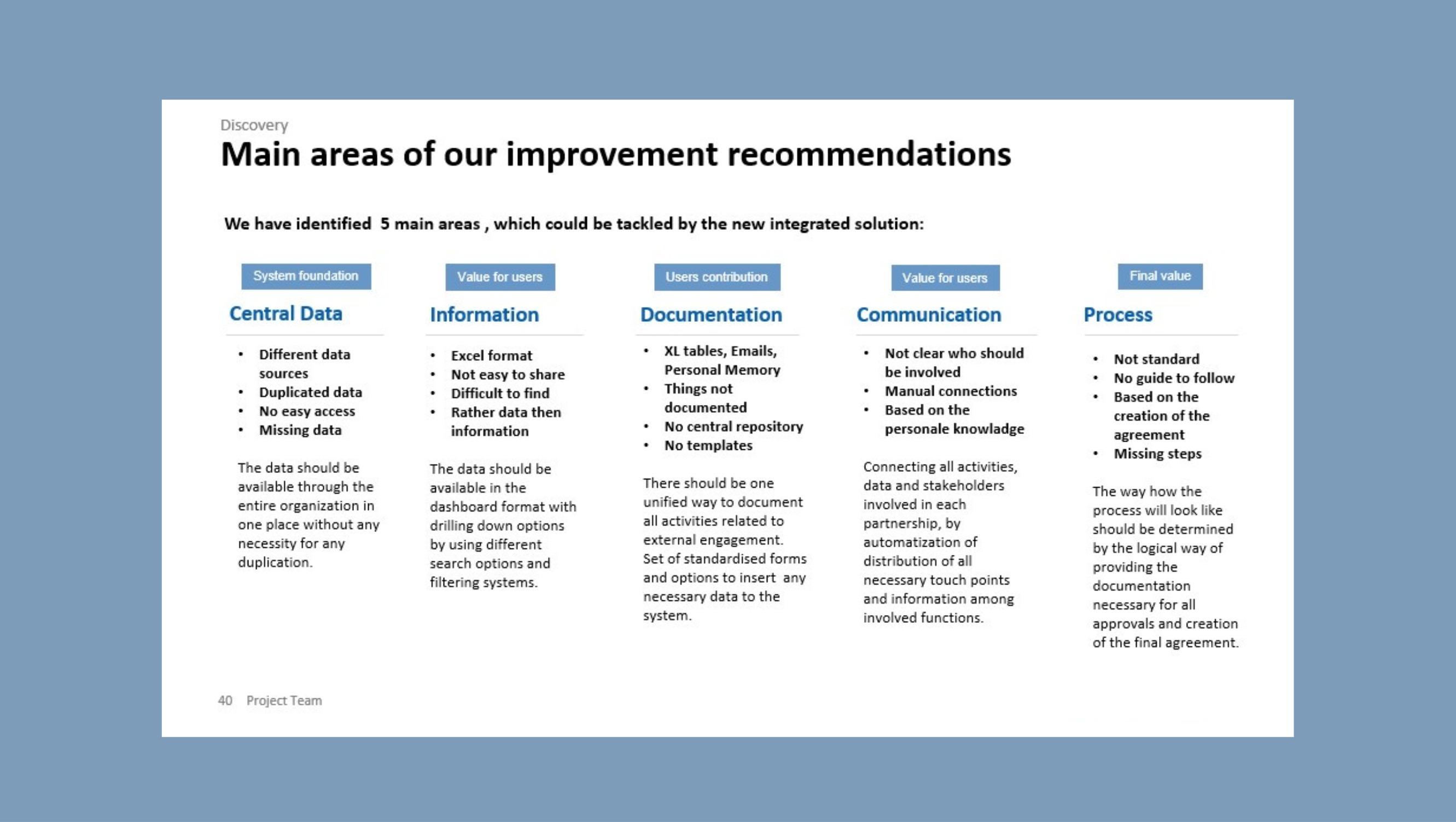
Based on the synthesis of the ecosystem map and stakeholder interviews, I categorized the findings into 5 actionable pillars. This transformed raw data into a clear strategic foundation for the new digital tool.
Key Metrics
- Stakeholder Alignment: 100% agreement on the prioritized roadmap and product goals.
- Risk Mitigation: Identified 3 major operational risks that would have been ignored without the discovery phase.
- Time-to-Development: Estimated 20% reduction in future development time due to clearly defined requirements.
What Was Next?
With the strategic roadmap approved, the next phase involves moving into high-fidelity prototyping and usability testing of the MVP. This will ensure that the transition from strategy to interface remains user-centered and operationally sound.